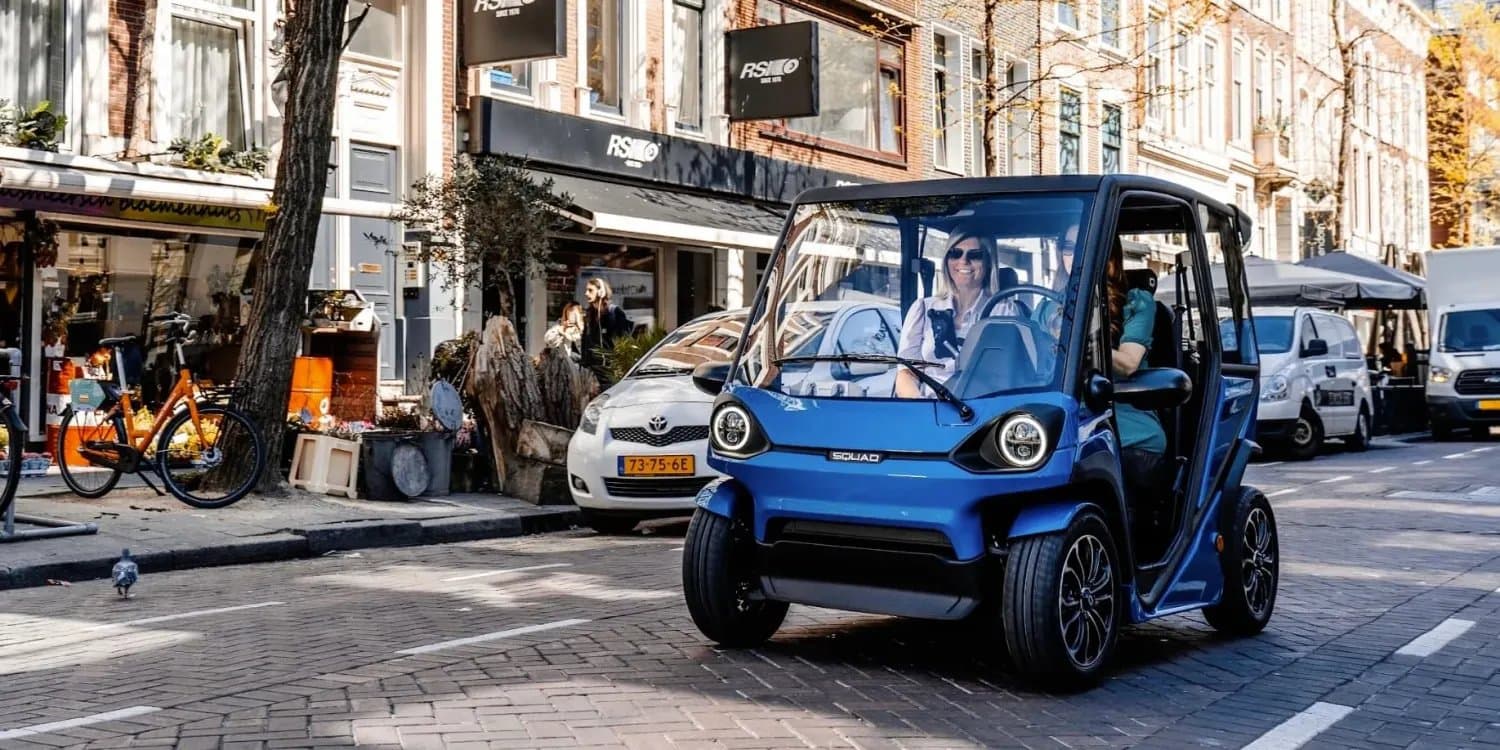
Light commercial vehicles (delivery vans, utility trucks, last-mile logistics vehicles) represent the fastest-growing segment of the EV market [1]. But unlike passenger cars, where range and acceleration sell the product, commercial vehicle electrification lives or dies on total cost of ownership, uptime reliability, and fleet-level operational efficiency. The BMS sits at the center of all three. And yet it's often the most underspecified component in commercial EV projects.
Commercial Vehicles Are a Different Animal
A passenger EV might charge once a day, drive on smooth roads, and sleep in a climate-controlled garage. A delivery van lives a harder life. It may cycle two or three times daily during peak season [2]. Constant stop-start driving means high-frequency current transients from acceleration and regenerative braking. The van parks outdoors in whatever weather happens: freezing mornings, scorching afternoons. And every hour of downtime costs money in missed deliveries.
These conditions demand more from the BMS than basic cell monitoring. The BMS needs high-frequency current measurement for accurate SOC estimation during aggressive driving profiles. It needs enough temperature sensors to detect localized hotspots from uneven cooling, not just one ambient measurement [3]. And it has to communicate reliably with the vehicle controller, the charger, and the fleet management platform simultaneously.
We've worked with several commercial vehicle OEMs during their diesel-to-electric transition, and the pattern is consistent: they underestimate BMS complexity until the prototype stage, then scramble to find a platform that handles the real-world demands.
A Distributed Architecture That Grows with the Pack
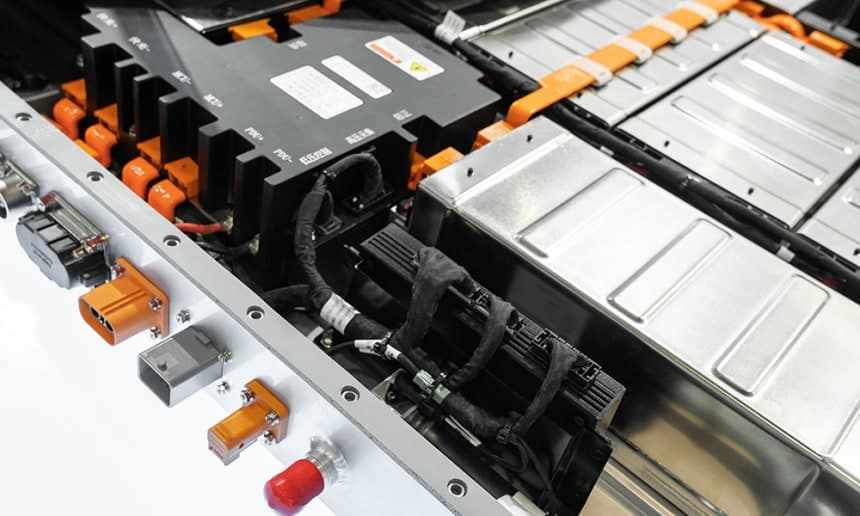
Light commercial vehicles typically use 30 to 100 kWh battery packs at 300V to 600V [4]. At these voltages no single board can monitor the whole string, so the BMS is distributed. A master runs the pack-level logic and slave modules sit next to the cells they measure.
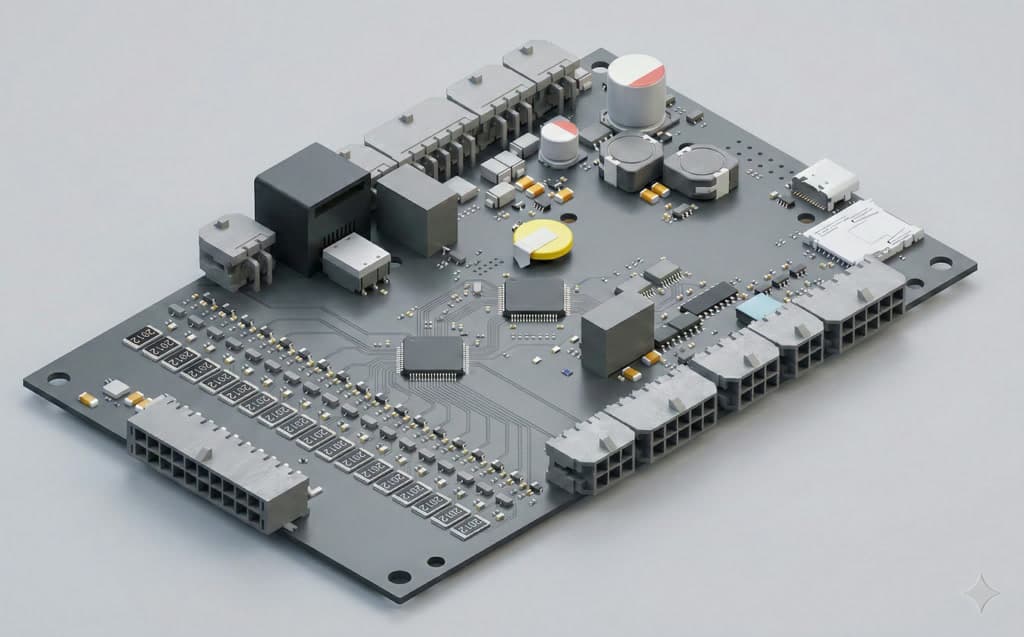
At the lower end (30 to 50 kWh with 96 to 120 cells), a BMS1820 master with BMS1802 slaves covers the pack. The master monitors its own 18 cells and each slave adds up to 18 more, so a 108-cell pack runs on one master and five slaves [5]. Each slave is self-powered from its cell group, balances at up to 1000 mA per cell and reports over an isolated daisy chain on standard CAT-5 cable. One harness per module, no external supply wiring, and the master keeps the interfaces vehicle controllers expect, with CAN Bus for real-time telemetry, RS485 for diagnostics, and WiFi or cellular for cloud connectivity.
For larger packs (60 to 100 kWh, cell counts above 200), the same master takes more slaves. A BMS1820 scales to 288 cells with BMS1802 or compact BMS1202 modules, and the BMS3610 monitors 36 cells directly before the first slave is added [5]. Vehicle OEMs tend to prefer this over a second controller, because one master means one CAN interface, one configuration and one firmware to qualify.
Why OTA and Cloud Connectivity Matter for Fleets
For a single vehicle, firmware updates via laptop cable are annoying but manageable. For a fleet of 200 vehicles across 8 depots, they're prohibitive [6]. That's where cloud-connected BMS with over-the-air update capability fundamentally changes the maintenance model. New SOC algorithms, revised protection thresholds, seasonal configuration changes, all deployed remotely during overnight charging windows without a single technician visit.
Similarly, cloud monitoring transforms fleet battery management from reactive to proactive [7]. Instead of discovering a battery problem when a delivery van fails on its route, the fleet manager gets early alerts: a cell trending warmer than its neighbors, a gradual SOC drift, increasing balancing events. Maintenance gets scheduled during planned downtime rather than causing roadside breakdowns.
For fleet operators, these capabilities determine whether electrification actually delivers on its total cost of ownership promise. The best battery chemistry and the most efficient drivetrain don't matter much if the fleet spends more on battery maintenance than it saves on diesel.
The Transition Is More Than a Powertrain Swap
Converting a commercial vehicle from diesel to electric isn't just swapping an engine for a motor and a fuel tank for a battery. The vehicle's entire intelligence layer changes [8]. The BMS becomes the most critical electronic component in the vehicle, responsible for safety, performance, longevity, and increasingly regulatory compliance as battery passport requirements take effect [9].
For OEMs and fleet operators navigating this transition, the BMS platform decision has long-term consequences. Cloud connectivity, OTA capability, multi-protocol communication, and data collection for eventual passport compliance aren't future-proofing [10]. They're the baseline for a commercial EV that's competitive in today's market.
References
- [1]ACEA, Light Commercial Vehicles: Electric and Alternatively Powered, EU Market Data 2024
- [2]McKinsey & Company, Why the Economics of Electrification Make Fleets Go First, 2023
- [3]Pesaran et al., Tools for Designing Thermal Management of Batteries in Electric Drive Vehicles, NREL, 2013
- [4]IEA, Global EV Outlook 2024 — Trends in Electric Light Commercial Vehicles
- [5]LiBat — Battery Management Systems: BMS1820 Master, BMS1802 and BMS1202 Slaves, and Complete Product Lineup
- [6]LiBat — OTA Firmware Updates: Managing Distributed Battery Fleets at Scale
- [7]BloombergNEF, Electric Vehicle Outlook 2024 — Fleet Electrification Economics
- [8]Roland Berger, E-Mobility Index 2024 — Commercial Vehicle Electrification Trends
- [9]Regulation (EU) 2023/1542 — Digital Battery Passport Requirements
- [10]Transport & Environment, Electrifying Last-Mile Delivery in Europe, 2023