
Every lithium battery pack needs a BMS, but not every project requires the same architecture. An e-scooter sharing fleet running small 36V or 48V packs has entirely different expectations than a warehouse buzzing with 80V forklifts, or a massive 400V rack-based energy storage system (ESS). Yet, they all share the same core necessities: cell monitoring, balancing, protection, and communication.
When designing a battery pack, the architecture is one of the very first calls you have to make. Why? Because it dictates everything that follows: wiring complexity, how much the system can scale, and the depth of data you can pull from the pack over its lifespan.
In this guide, we break down how to match your BMS architecture to your specific application, using real-world scenarios across four major sectors.
Three Architectures, One Goal
Standalone, Master-Slave, and Multi-Master architectures all share the same fundamental job: keeping cells within safe operating limits while squeezing out maximum usable capacity. The real difference lies in how they are organized and how far they can scale. With the global BMS market projected to hit $55.1 billion by 2032 [11], the variety of applications demanding these setups is exploding.
Standalone BMS: Packs everything onto a single board. Cell monitoring, passive balancing, protection switching (MOSFETs), current sensing, and communication interfaces all live in one unit. One board, one set of connectors, one configuration. It is the go-to solution for packs where the entire cell stack (typically up to 18S) can be monitored from a single point.
Master-Slave BMS: Splits the workload into two layers. Slave modules sit physically close to the cells, monitoring and balancing their own local groups (usually 12S or 18S). The master module acts as the brain, aggregating data from the slaves, running state estimation (SoC, SoH), managing power distribution, and handling external communications [14]. Slaves are universal hardware; the master holds the project-specific logic.
Multi-Master BMS: Takes scalability to the extreme. It links multiple master-slave stacks into a coordinated network overseen by a higher-level master unit. Want to add capacity? Just add another identical stack, whether they are connected in parallel, series, or in a distributed topology.
Let's look at how these architectures perform in the field.
Micromobility: Where Compact Power Wins (Standalone)
E-scooters, e-bikes, and light personal mobility devices usually run on relatively small packs, typically 10S to 16S LFP or NMC at 36V or 48V. Space inside the enclosure is practically non-existent, weight limits are strict, and unit costs make or break fleet economics.
This is where a Standalone BMS truly shines. You can fit 420mA passive balancing, a 250A integrated power path with MOSFET switches, built-in precharge, short circuit protection, and triple communications (CAN Bus, RS232, RS485) into a tight 160 × 95 mm footprint [1].
For even tighter spaces, like a swappable 12S module for shared scooters, an ultra-compact 65 × 43.5 mm board weighing just 50 grams can easily handle monitoring, 400mA balancing, and a relay output [2].
Then there is the certification hurdle. With California's mandatory UL certification for e-bike batteries kicking in by January 2026, and similar regulations rolling out in the EU, you need documented protection for overvoltage, undervoltage, overcurrent, and temperatures [3]. A standalone unit delivers all of this in one easily certifiable package, taking a massive load off manufacturers.
Light EVs: The Transition Zone
Light commercial vehicles, golf carts, and compact cargo EVs sit in a fascinating middle ground. Packs usually range from 14S to 24S (45V to 77V), with current demands between 100A and 300A.
At the lower end of this spectrum, a standalone BMS is a great plug-and-play solution. But once your cell count creeps past 18S (say, a 20S or 24S pack for a heavy-duty utility cart), the Master-Slave architecture becomes the practical choice. A single master paired with one or two slaves covers the entire stack while keeping communication with the vehicle controller seamless [4][5].
This is also where fleet connectivity really starts paying the bills. If you are running last-mile delivery or campus transport, you need real-time health data. Hooking up a GSM cloud connector to the BMS CAN Bus gives you remote SoH monitoring, GPS tracking, and predictive maintenance alerts straight to a cloud dashboard [6][7].
Warehousing and Industrial: Scalable Heavy Duty (Master-Slave)
Material handling is where Master-Slave architecture flexes its muscles. We are talking about everything from 24V pallet jacks to 80V counterbalance forklifts, pushing currents past 500A during heavy lifts. The forklift battery market is set to nearly double to $11.68 billion by 2034 [12], largely driven by lithium adoption in multi-shift warehouses where downtime is not an option.
Master-Slave thrives here for two key reasons:
Modularity: Whether you are building a 48V or 80V pack, you use the exact same slave hardware. You just change the quantity per pack.
Heavy-Duty Balancing: "Opportunity charging" in busy warehouses causes rapid cell drift. Slave modules packing up to 1000mA of passive balancing current handle this effortlessly [5].
The master handles the smarts (contactor sequencing, charger protocol negotiation), while up to 16 universal slaves can be daisy-chained over 30+ meters of standard RJ45 cabling with 1.5 kV galvanic isolation [5]. Add cloud connectivity, and operators can see exactly which packs are degrading faster, spot thermal trends, and know exactly when to rotate a battery out of service [8].
Energy Storage: High Voltage, Maximum Scale
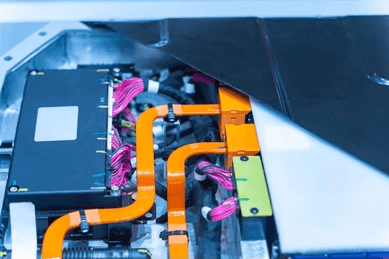
Commercial and industrial (C&I) energy storage, telecom backup, and renewable energy buffering operate in a completely different league. Rack-based systems usually run from 200V to 800V, sometimes pushing past 1000V.
Master-slave setups easily handle single-string configurations up to 1500V. In ESS, the priority is high balancing current and long daisy-chain distances to ensure hundreds of cells age evenly across a massive rack [5]. For serious high-voltage management, purpose-built Battery Control Units (BCUs) step in, bringing isolated analog channels, dual CAN Bus 2.0b ports, WiFi/GSM connectivity, and onboard MicroSD data logging for strict compliance and warranty documentation [9].
Multi-Master: When One System Is Not Enough
Eventually, real-world energy projects outgrow a single battery string. Enter the Multi-Master architecture.
Imagine a commercial ESS installation. A single rack is rarely enough to shave peak loads or meet load-shifting requirements. Multi-master allows integrators to start with a single-rack pilot and scale up to a multi-megawatt system simply by adding identical master-slave stacks. No rewriting control logic, no custom firmware per configuration.
Telecom backup relies on this for redundancy. If one battery string drops offline, the system must survive. Each battery bank manages itself, while a higher-level master coordinates load distribution, charging priority, and failovers across the banks.
Marine electrification is another perfect use case. As IMO regulations push the marine battery market to $1.5 billion by 2030 [13], boat builders face a major physical constraint: massive, boxy battery banks do not fit into curved, cramped hulls. The solution? Distribute smaller packs wherever there is space, under seats or in separate compartments. Each pack runs its own master-slave BMS, and a Multi-Master network manages them as one unified energy system. The battery adapts to the boat, not the other way around.
The Decision Matrix
Not sure which architecture fits your build? Here is a quick reference guide:
| Criterion | Standalone | Master-Slave | Multi-Master |
|---|---|---|---|
| Cell count | 6S–16S | 5S–288S | 288S+ across parallel strings |
| Pack voltage | Up to ~75V (18S NMC) | Up to 1500V | Up to 1500V per string |
| Typical applications | E-scooters, e-bikes, golf carts, light AGVs | Forklifts, cargo EVs, single-rack ESS | Multi-rack ESS, telecom, marine, parallel industrial packs |
| Power path | Integrated MOSFETs (up to 250A) or external contactors | External contactors | External contactors per string |
| Balancing current | 400–420mA passive | 400–1000mA passive | 400–1000mA passive per string |
| Scalability | Fixed (single board) | Modular (up to 16 slaves) | Repeatable (add master-slave stacks) |
| Multi-pack topology | Single pack only | Single string | Parallel, series, or distributed |
| Form factor | Ultra-compact (65 × 43 mm possible) | Standard modular | Standard modular per string |
| Integration effort | Low | Medium | Medium (repeatable pattern) |
| Cloud connectivity | Via external GSM module | Via external GSM module | Via external GSM module (per master) |
Beyond the BMS: End-to-End Battery Digitalization
A BMS generates a relentless stream of operational data: cell voltages, temperatures, current profiles, and protection triggers. On its own, this data just serves the local protection logic. But route it through a GSM module [6] to a cloud platform [7], and it becomes actionable fleet intelligence. Tie it to a digital battery passport, and it becomes official compliance documentation and proof of residual value.
With the EU Battery Regulation making digital battery passports mandatory by February 2027 [15], the raw telemetry your BMS collects today is the bedrock of tomorrow's compliance, from carbon footprint declarations to second-life eligibility scoring [10].
Connect the right BMS to the right digital ecosystem, and you turn a basic safety device into a strategic corporate asset.
References
- [1]LiBat BMS1601: 16S Standalone BMS with integrated 250A power path, MOSFET switches, precharge control, short circuit protection, and triple communication interface.
- [2]LiBat BMS1202: 12S Ultra-Compact Slave BMS (65 × 43.5 mm, 50g) with 400mA passive balancing, isolated daisy-chain, and relay output.
- [3]California Assembly Bill 1271: Mandatory UL 2271 certification for e-bike batteries effective January 1, 2026.
- [4]LiBat BMS1810: 18S Master BMS with 420mA passive balancing, triple communication (RS485, RS232, CAN Bus), cloud connection, and OTA firmware updates.
- [5]LiBat BMS1802: 18S Slave BMS with 1000mA passive balancing, 1.5 kV galvanic isolation, RJ45 daisy-chain connectivity, and up to 16 stacked units over 30+ meters.
- [6]LiBat INT101: GSM+GPS Cloud Connector module with 2G communication, GNSS positioning, and secure cloud platform integration for all LiBat BMS types.
- [7]LiBat LiMon CONNECT: Cloud-based battery monitoring platform with real-time dashboards, GPS tracking, fleet diagnostics, and historical data analysis.
- [8]IoT-Based Battery Health Monitoring: Studies indicate predictive analytics can forecast end-of-life 30 to 60 days in advance and extend pack lifespan by 20 to 35 percent through optimized charging patterns.
- [9]LiBat BCU2002: High-Voltage Battery Control Unit supporting up to 1500V, WiFi + GSM connectivity, dual CAN Bus 2.0b, four isolated analog channels, and MicroSD data logging.
- [10]LiBat Battery Passport: EU Battery Regulation compliance module with lifecycle analytics, second-life eligibility scoring, and automated BMS data ingestion.
- [11]Battery Management System Market: Projected to reach $55.1 billion by 2032, growing at a CAGR of 19.5% from $7.8 billion in 2022 (Coherent Market Insights).
- [12]Forklift Battery Market: Projected to grow from $5.99 billion in 2025 to $11.68 billion by 2034, driven by warehouse and logistics electrification (Fortune Business Insights).
- [13]Marine Battery Market: Projected to grow from $932.5 million in 2025 to $1.5 billion by 2030, driven by IMO emissions regulations and vessel electrification (MarketsandMarkets).
- [14]Master-Slave BMS Architecture with CAN-bus for Inter-Cell Communication (IEEE Conference Publication, 2024).
- [15]EU Battery Regulation Timeline: From February 2027, all EV and industrial batteries above 2 kWh must carry a digital battery passport accessible via QR code (EU Regulation 2023/1542).